About this Honey
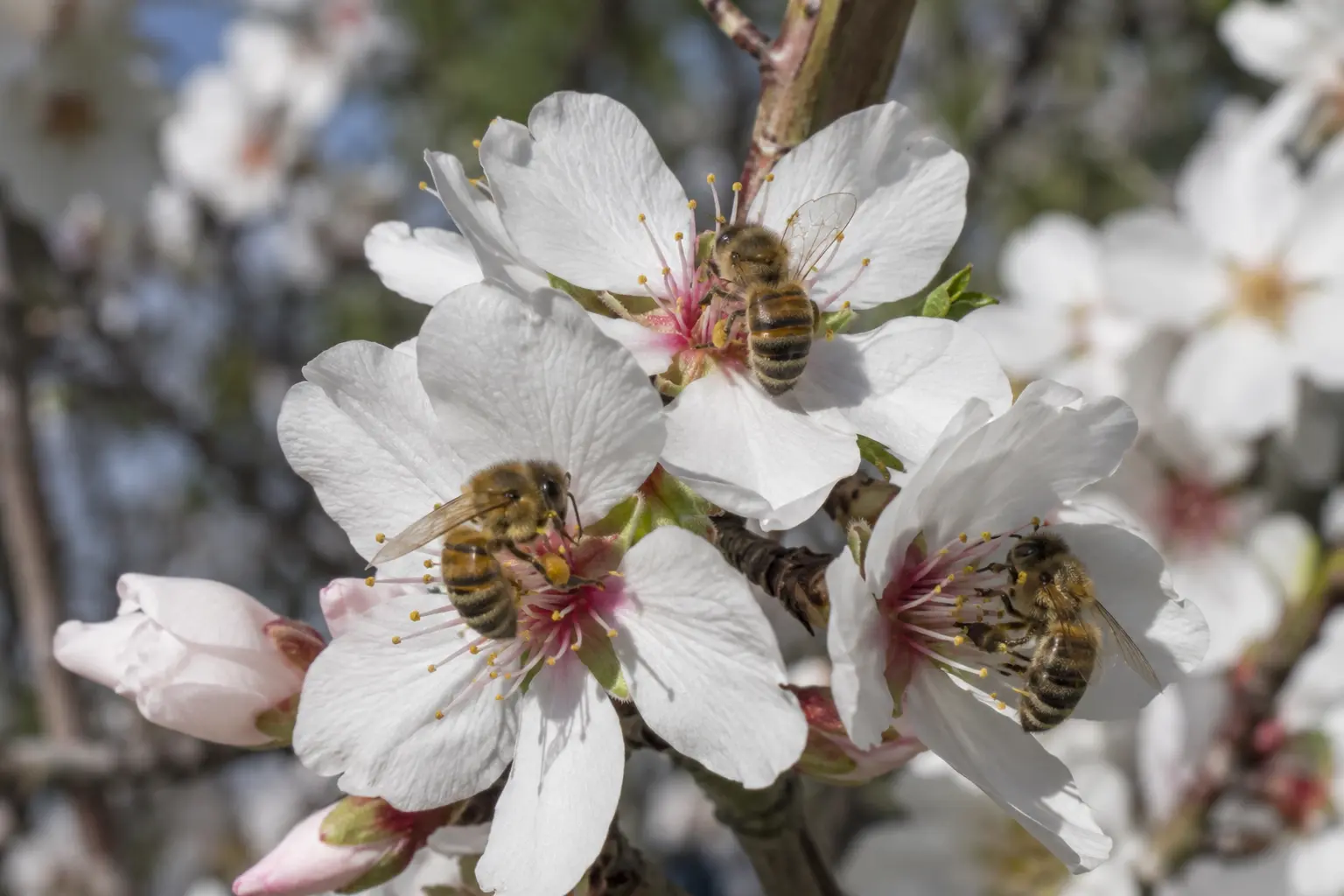
Harvested in California during the massive almond pollination event in February. This honey is widely misunderstood—pure almond honey contains amygdalin and can be bitter. However, the honey harvested is often a mix of almond and early wild mustard. It is dark, nutty, and strong-flavored, primarily used by commercial bakeries rather than sold as a table varietal.
Honey Characteristics
Prunus dulcis
Winter
Specialty
Central Valley California
Toasted marzipan, bitter almond oil, sharp wild mustard flower
Heavy-bodied, dense, slightly resinous mouthfeel with uniform granulation
Honey Profile Chart
Scale: 1 (Low) → 5 (High)
The Story
The February almond pollination event in California's Central Valley drops honey bees into an intense, monocultural environment driven by early-season thermal shifts. Pure Prunus dulcis nectar contains high concentrations of the bitter glycoside amygdalin, which serves as a natural defense mechanism for the plant and requires specific enzymatic processing by the bees within the hive. This dark amber nectar carries a high nitrogenous content and an uneven sugar ratio that sets into a dense, gritty, highly resinous crystalline structure. Due to its naturally bitter profile and high concentration of complex amino acids, it is highly sought after by commercial bakeries for artisan gingerbread and spiced dough formulas where it deepens Maillard browning and cuts intense fat profiles.
Sensory Profile
Tap a note to highlight it. These are the defining sensory characteristics of Almond Blossom Honey.
Where Almond Blossom Honey is Produced
Highlighted states are known sources of Almond Blossom honey. Click a state to explore local apiaries.
Culinary Applications
Best Pairings
Foods and drinks that bring out the best in Almond Blossom Honey.
Apiaries with Almond Blossom honey
Local apiaries offering this honey variety. Support your local beekeepers!
At a Glance
A Specialty variety, harvested in Winter, from Central Valley California, derived from Prunus dulcis blossoms.