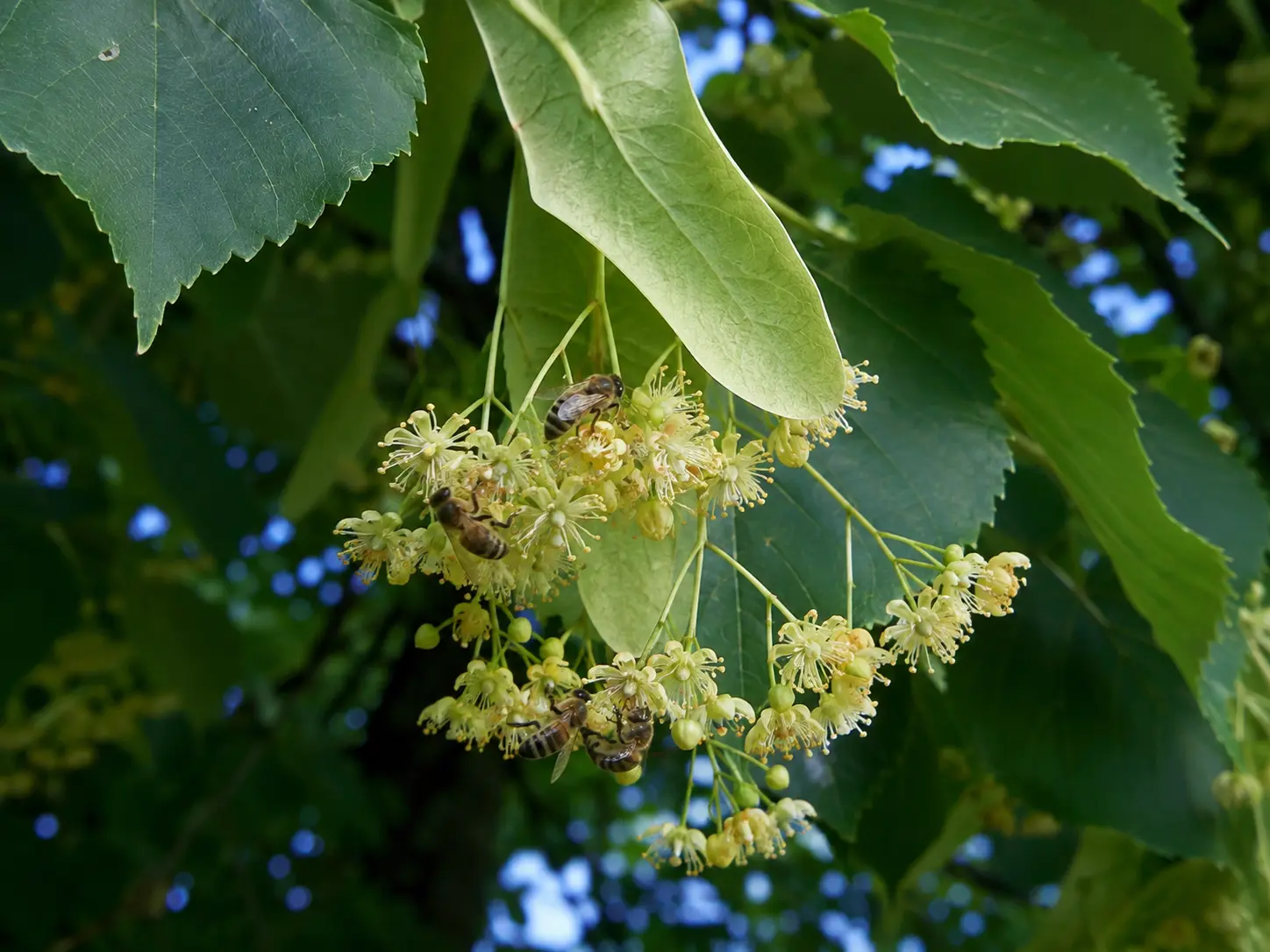
About this Honey
Sourced from the North American Basswood tree (Tilia americana), found from the Midwest to the Northeast. Produced during a short, intense flow in early summer, this water-white honey is famous for its biting, distinctive flavor that lingers on the palate. It is highly active enzymatically and is prized by connoisseurs for its complex, woody, and slightly minty notes.
Honey Characteristics
Tilia americana
Summer
Specialty
Upper Midwest & Northeast
Biting camphor, sharp spearmint oils, warm linden wood, fresh forest balsam
Water-smooth, crisp medium-light body, building fine micro-crystals over time
Honey Profile Chart
Scale: 1 (Low) → 5 (High)
The Story
The early summer harvest of Tilia americana relies on a short, volatile flow lasting less than fourteen days, where atmospheric humidity must remain high enough to prevent the exposed, shallow nectaries from drying out. Honey bees target these hanging, fragrant clusters with immense intensity, often foraging late into the dusk hours due to the tree's continuous circadian nectar production. Enzymatically hyper-active, this water-white varietal possesses a high glucose-to-fructose ratio that initiates fine, micro-crystalline structures over long storage intervals. Its distinct camphorous and minty compounds degrade rapidly under high thermal stress, meaning its culinary deployment must be restricted to raw finishes, light vinaigrette emulsions, or low-heat beverage sweetening.
Sensory Profile
Tap a note to highlight it. These are the defining sensory characteristics of Basswood Honey.
Where Basswood Honey is Produced
Highlighted states are known sources of Basswood honey. Click a state to explore local apiaries.
Culinary Applications
Best Pairings
Foods and drinks that bring out the best in Basswood Honey.
Apiaries with Basswood honey
Local apiaries offering this honey variety. Support your local beekeepers!
At a Glance
A Specialty variety, harvested in Summer, from Upper Midwest & Northeast, derived from Tilia americana blossoms.